25th of December 2025
Mohamed Hazza: Strong Legislative Framework, but Execution Remains the Biggest Challenge
By: Egyptian Private Equity & Venture Capital Association (EPEA)
Keywords: Mergers & Acquisitions , Telecommunication, Media and Technology, Infrastructure & Power, Oil & Gas and Mineral Resources , Financial Institutions
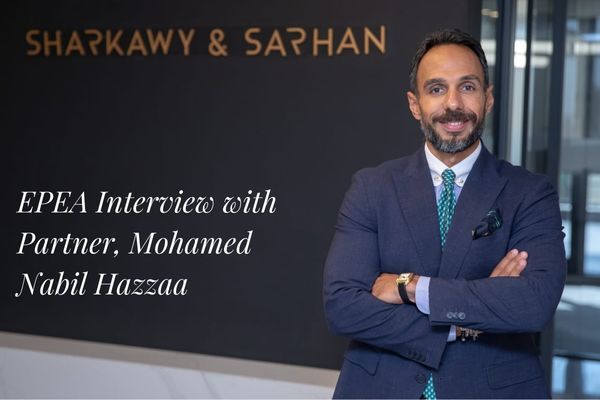
Mohamed Hazza, Partner at Sharkawy & Sarhan Law Firm, believes that Egypt enjoys a robust and intricate legislative environment. However, the main challenge lies not in drafting strong legislation, but in the effective implementation of these laws.
He explains that while the legislative framework allows for broad interpretation by supervisory bodies—aimed at providing flexibility to adapt to developments without the need to amend laws—the real problem emerges when interpretations diverge between departments within the same authority. This inconsistency often necessitates escalation to heads of departments or even heads of authorities to resolve differences—something that should not become a regular practice.
Hazza stresses the need to complement legislation with unified principles across authorities, through workshops and internal training to ensure consistent interpretation and application. These principles, he adds, should be based on real cases previously encountered and agreed upon to guide future decisions uniformly.
- Security Clearances: A Major Bottleneck
He points out that certain approvals, such as those required for companies operating in Sinai—particularly when changing their boards—can take six months to a year to obtain, despite not always warranting such intense scrutiny.
Even for regular companies, a new procedure has been introduced where multiple security checks cannot run in parallel. For example, if a company seeks to change several board members, it must wait for the first security clearance to be approved before proceeding to the next.
This sequential approach often halts multiple corporate procedures and general assemblies, raising the question: Why can’t companies proceed while awaiting clearance, and rectify issues if the check comes back negative?
He adds that his firm has faced this issue in M&A transactions where all steps were completed but the deals were left on hold awaiting security approvals. Hazza calls for faster and better-coordinated clearance processes to prevent these approvals from becoming an obstacle to closing transactions.
- Pre-Merger Approvals: Call for a Clear Template
Turning to pre-merger notifications with the Egyptian Competition Authority, Hazza acknowledges the responsive and constructive engagement from the Authority. However, due to workload accumulation and slow turnaround times, he suggests introducing a standard template or guidance outlining the required documents and information. This would enable companies to better assess whether they can meet the requirements or opt out before submission.
- One-Stop-Shop for Investment Procedures
Hazza calls for streamlining transaction procedures by ensuring the presence of qualified experts from all relevant economic sectors at the premises of the General Authority for Investment (GAFI) and the Financial Regulatory Authority (FRA).
This approach would eliminate the need for investors to deal with multiple agencies separately, thereby accelerating licensing and approval processes for projects.
- Labour Transfer and Social Insurance Gaps
Another procedural gap exists in transferring workers when a business changes ownership. While the Labour Law allows for the transfer of employees in acquisitions, the Social Insurance Law does not, forcing the new owner to terminate all contracts and insurance registrations, then reissue them—an impractical and cumbersome process, especially for large workforces.
Hazza proposes a protocol between the Ministry of Manpower and the Social Insurance Authority to allow for seamless transfer of workers under the same insurance file and contracts in such cases.
- Outdated Laws and the Need for Legislative Renewal
Hazza points out that some laws dating back to the 1940s and 1950s—such as those governing public utilities—remain in effect today. New project licenses often include clauses stating that these outdated laws apply.
Meanwhile, there are no dedicated laws regulating modern sectors like water treatment and desalination projects. Hazza emphasizes the need for a long-term legislative reform plan to modernize the legal framework, while short-term priorities should focus on improving implementation and accelerating procedures.
- Offshore vs Onshore Incorporation: Investors Seek Simplicity
Discussing the growing trend of companies opting to incorporate offshore, Hzza identifies two main drivers:
- Procedural Efficiency: Although incorporation itself in Egypt is relatively fast, subsequent steps—such as obtaining a tax card, which can take three to four months—are excessively time-consuming.
- Shareholder Rights & Transfers: Offshore structures provide simpler and faster mechanisms for transferring shares, often completed in a single notarized session using private contracts. In Egypt, however, transactions involve multiple steps and lengthy timelines.
Moreover, shareholder rights are better protected offshore. In Egypt, violations of a company’s articles can be immediately rectified by regulatory intervention, but violations of shareholders’ agreements cannot be enforced directly by authorities, pushing minority shareholders toward litigation or arbitration. Offshore jurisdictions, by contrast, offer stronger protection, particularly for minority rights, including voting and forced-sale provisions.
- Key Sectors Driving Deal Activity
Hazza reveals that his firm is currently witnessing significant transaction activity in renewable energy, given its high profitability. Other active sectors include insurance, pharmaceuticals— where his firm represents the buyer in the Delta Insurance transaction—as well as non-banking financial services, fintech, and food & beverage.
The firm is currently advising on around eight transactions worth USD 700–900 million, in addition to arranging USD 2 billion in financing deals. These financings involve international development finance institutions, such as the IFC and EBRD, as well as Egyptian banks expanding into renewable energy and port financing programs.
- Constructive Cooperation, but Implementation Needs Refinement
Hazza concludes by acknowledging the strong cooperation with government authorities, noting their responsive engagement. However, he stresses the ultimate goal is to avoid recurring issues altogether, without the need for constant escalation to top officials.
Mohamed Hazza, Partner at Sharkawy & Sarhan Law Firm, believes that Egypt enjoys a robust and intricate legislative environment. However, the main challenge lies not in drafting strong legislation, but in the effective implementation of these laws.
He explains that while the legislative framework allows for broad interpretation by supervisory bodies—aimed at providing flexibility to adapt to developments without the need to amend laws—the real problem emerges when interpretations diverge between departments within the same authority. This inconsistency often necessitates escalation to heads of departments or even heads of authorities to resolve differences—something that should not become a regular practice.
Hazza stresses the need to complement legislation with unified principles across authorities, through workshops and internal training to ensure consistent interpretation and application. These principles, he adds, should be based on real cases previously encountered and agreed upon to guide future decisions uniformly.
- Security Clearances: A Major Bottleneck
He points out that certain approvals, such as those required for companies operating in Sinai—particularly when changing their boards—can take six months to a year to obtain, despite not always warranting such intense scrutiny.
Even for regular companies, a new procedure has been introduced where multiple security checks cannot run in parallel. For example, if a company seeks to change several board members, it must wait for the first security clearance to be approved before proceeding to the next.
This sequential approach often halts multiple corporate procedures and general assemblies, raising the question: Why can’t companies proceed while awaiting clearance, and rectify issues if the check comes back negative?
He adds that his firm has faced this issue in M&A transactions where all steps were completed but the deals were left on hold awaiting security approvals. Hazza calls for faster and better-coordinated clearance processes to prevent these approvals from becoming an obstacle to closing transactions.
- Pre-Merger Approvals: Call for a Clear Template
Turning to pre-merger notifications with the Egyptian Competition Authority, Hazza acknowledges the responsive and constructive engagement from the Authority. However, due to workload accumulation and slow turnaround times, he suggests introducing a standard template or guidance outlining the required documents and information. This would enable companies to better assess whether they can meet the requirements or opt out before submission.
- One-Stop-Shop for Investment Procedures
Hazza calls for streamlining transaction procedures by ensuring the presence of qualified experts from all relevant economic sectors at the premises of the General Authority for Investment (GAFI) and the Financial Regulatory Authority (FRA).
This approach would eliminate the need for investors to deal with multiple agencies separately, thereby accelerating licensing and approval processes for projects.
- Labour Transfer and Social Insurance Gaps
Another procedural gap exists in transferring workers when a business changes ownership. While the Labour Law allows for the transfer of employees in acquisitions, the Social Insurance Law does not, forcing the new owner to terminate all contracts and insurance registrations, then reissue them—an impractical and cumbersome process, especially for large workforces.
Hazza proposes a protocol between the Ministry of Manpower and the Social Insurance Authority to allow for seamless transfer of workers under the same insurance file and contracts in such cases.
- Outdated Laws and the Need for Legislative Renewal
Hazza points out that some laws dating back to the 1940s and 1950s—such as those governing public utilities—remain in effect today. New project licenses often include clauses stating that these outdated laws apply.
Meanwhile, there are no dedicated laws regulating modern sectors like water treatment and desalination projects. Hazza emphasizes the need for a long-term legislative reform plan to modernize the legal framework, while short-term priorities should focus on improving implementation and accelerating procedures.
- Offshore vs Onshore Incorporation: Investors Seek Simplicity
Discussing the growing trend of companies opting to incorporate offshore, Hzza identifies two main drivers:
- Procedural Efficiency: Although incorporation itself in Egypt is relatively fast, subsequent steps—such as obtaining a tax card, which can take three to four months—are excessively time-consuming.
- Shareholder Rights & Transfers: Offshore structures provide simpler and faster mechanisms for transferring shares, often completed in a single notarized session using private contracts. In Egypt, however, transactions involve multiple steps and lengthy timelines.
Moreover, shareholder rights are better protected offshore. In Egypt, violations of a company’s articles can be immediately rectified by regulatory intervention, but violations of shareholders’ agreements cannot be enforced directly by authorities, pushing minority shareholders toward litigation or arbitration. Offshore jurisdictions, by contrast, offer stronger protection, particularly for minority rights, including voting and forced-sale provisions.
- Key Sectors Driving Deal Activity
Hazza reveals that his firm is currently witnessing significant transaction activity in renewable energy, given its high profitability. Other active sectors include insurance, pharmaceuticals— where his firm represents the buyer in the Delta Insurance transaction—as well as non-banking financial services, fintech, and food & beverage.
The firm is currently advising on around eight transactions worth USD 700–900 million, in addition to arranging USD 2 billion in financing deals. These financings involve international development finance institutions, such as the IFC and EBRD, as well as Egyptian banks expanding into renewable energy and port financing programs.
- Constructive Cooperation, but Implementation Needs Refinement
Hazza concludes by acknowledging the strong cooperation with government authorities, noting their responsive engagement. However, he stresses the ultimate goal is to avoid recurring issues altogether, without the need for constant escalation to top officials.

Mohamed Hazza: Strong Legislative Framework, but Execution Remains the Biggest Challenge
21st of November 2025
By: Amwal Elghad
Keywords: Mergers & Acquisitions , Telecommunication, Media and Technology,Infrastructure & Power, Oil & Gas and Mineral Resources , Financial Institutions
Mohamed Hazza, Partner at Sharkawy & Sarhan Law Firm, believes that Egypt enjoys a robust and intricate legislative environment. However, the main challenge lies not in drafting strong legislation, but in the effective implementation of these laws.
He explains that while the legislative framework allows for broad interpretation by supervisory bodies—aimed at providing flexibility to adapt to developments without the need to amend laws—the real problem emerges when interpretations diverge between departments within the same authority. This inconsistency often necessitates escalation to heads of departments or even heads of authorities to resolve differences—something that should not become a regular practice.
Hazza stresses the need to complement legislation with unified principles across authorities, through workshops and internal training to ensure consistent interpretation and application. These principles, he adds, should be based on real cases previously encountered and agreed upon to guide future decisions uniformly.
- Security Clearances: A Major Bottleneck
He points out that certain approvals, such as those required for companies operating in Sinai—particularly when changing their boards—can take six months to a year to obtain, despite not always warranting such intense scrutiny.
Even for regular companies, a new procedure has been introduced where multiple security checks cannot run in parallel. For example, if a company seeks to change several board members, it must wait for the first security clearance to be approved before proceeding to the next.
This sequential approach often halts multiple corporate procedures and general assemblies, raising the question: Why can’t companies proceed while awaiting clearance, and rectify issues if the check comes back negative?
He adds that his firm has faced this issue in M&A transactions where all steps were completed but the deals were left on hold awaiting security approvals. Hazza calls for faster and better-coordinated clearance processes to prevent these approvals from becoming an obstacle to closing transactions.
- Pre-Merger Approvals: Call for a Clear Template
Turning to pre-merger notifications with the Egyptian Competition Authority, Hazza acknowledges the responsive and constructive engagement from the Authority. However, due to workload accumulation and slow turnaround times, he suggests introducing a standard template or guidance outlining the required documents and information. This would enable companies to better assess whether they can meet the requirements or opt out before submission.
- One-Stop-Shop for Investment Procedures
Hazza calls for streamlining transaction procedures by ensuring the presence of qualified experts from all relevant economic sectors at the premises of the General Authority for Investment (GAFI) and the Financial Regulatory Authority (FRA).
This approach would eliminate the need for investors to deal with multiple agencies separately, thereby accelerating licensing and approval processes for projects.
- Labour Transfer and Social Insurance Gaps
Another procedural gap exists in transferring workers when a business changes ownership. While the Labour Law allows for the transfer of employees in acquisitions, the Social Insurance Law does not, forcing the new owner to terminate all contracts and insurance registrations, then reissue them—an impractical and cumbersome process, especially for large workforces.
Hazza proposes a protocol between the Ministry of Manpower and the Social Insurance Authority to allow for seamless transfer of workers under the same insurance file and contracts in such cases.
- Outdated Laws and the Need for Legislative Renewal
Hazza points out that some laws dating back to the 1940s and 1950s—such as those governing public utilities—remain in effect today. New project licenses often include clauses stating that these outdated laws apply.
Meanwhile, there are no dedicated laws regulating modern sectors like water treatment and desalination projects. Hazza emphasizes the need for a long-term legislative reform plan to modernize the legal framework, while short-term priorities should focus on improving implementation and accelerating procedures.
- Offshore vs Onshore Incorporation: Investors Seek Simplicity
Discussing the growing trend of companies opting to incorporate offshore, Hzza identifies two main drivers:
- Procedural Efficiency: Although incorporation itself in Egypt is relatively fast, subsequent steps—such as obtaining a tax card, which can take three to four months—are excessively time-consuming.
- Shareholder Rights & Transfers: Offshore structures provide simpler and faster mechanisms for transferring shares, often completed in a single notarized session using private contracts. In Egypt, however, transactions involve multiple steps and lengthy timelines.
Moreover, shareholder rights are better protected offshore. In Egypt, violations of a company’s articles can be immediately rectified by regulatory intervention, but violations of shareholders’ agreements cannot be enforced directly by authorities, pushing minority shareholders toward litigation or arbitration. Offshore jurisdictions, by contrast, offer stronger protection, particularly for minority rights, including voting and forced-sale provisions.
- Key Sectors Driving Deal Activity
Hazza reveals that his firm is currently witnessing significant transaction activity in renewable energy, given its high profitability. Other active sectors include insurance, pharmaceuticals— where his firm represents the buyer in the Delta Insurance transaction—as well as non-banking financial services, fintech, and food & beverage.
The firm is currently advising on around eight transactions worth USD 700–900 million, in addition to arranging USD 2 billion in financing deals. These financings involve international development finance institutions, such as the IFC and EBRD, as well as Egyptian banks expanding into renewable energy and port financing programs.
- Constructive Cooperation, but Implementation Needs Refinement
Hazza concludes by acknowledging the strong cooperation with government authorities, noting their responsive engagement. However, he stresses the ultimate goal is to avoid recurring issues altogether, without the need for constant escalation to top officials.
Mohamed Hazza, Partner at Sharkawy & Sarhan Law Firm, believes that Egypt enjoys a robust and intricate legislative environment. However, the main challenge lies not in drafting strong legislation, but in the effective implementation of these laws.
He explains that while the legislative framework allows for broad interpretation by supervisory bodies—aimed at providing flexibility to adapt to developments without the need to amend laws—the real problem emerges when interpretations diverge between departments within the same authority. This inconsistency often necessitates escalation to heads of departments or even heads of authorities to resolve differences—something that should not become a regular practice.
Hazza stresses the need to complement legislation with unified principles across authorities, through workshops and internal training to ensure consistent interpretation and application. These principles, he adds, should be based on real cases previously encountered and agreed upon to guide future decisions uniformly.
- Security Clearances: A Major Bottleneck
He points out that certain approvals, such as those required for companies operating in Sinai—particularly when changing their boards—can take six months to a year to obtain, despite not always warranting such intense scrutiny.
Even for regular companies, a new procedure has been introduced where multiple security checks cannot run in parallel. For example, if a company seeks to change several board members, it must wait for the first security clearance to be approved before proceeding to the next.
This sequential approach often halts multiple corporate procedures and general assemblies, raising the question: Why can’t companies proceed while awaiting clearance, and rectify issues if the check comes back negative?
He adds that his firm has faced this issue in M&A transactions where all steps were completed but the deals were left on hold awaiting security approvals. Hazza calls for faster and better-coordinated clearance processes to prevent these approvals from becoming an obstacle to closing transactions.
- Pre-Merger Approvals: Call for a Clear Template
Turning to pre-merger notifications with the Egyptian Competition Authority, Hazza acknowledges the responsive and constructive engagement from the Authority. However, due to workload accumulation and slow turnaround times, he suggests introducing a standard template or guidance outlining the required documents and information. This would enable companies to better assess whether they can meet the requirements or opt out before submission.
- One-Stop-Shop for Investment Procedures
Hazza calls for streamlining transaction procedures by ensuring the presence of qualified experts from all relevant economic sectors at the premises of the General Authority for Investment (GAFI) and the Financial Regulatory Authority (FRA).
This approach would eliminate the need for investors to deal with multiple agencies separately, thereby accelerating licensing and approval processes for projects.
- Labour Transfer and Social Insurance Gaps
Another procedural gap exists in transferring workers when a business changes ownership. While the Labour Law allows for the transfer of employees in acquisitions, the Social Insurance Law does not, forcing the new owner to terminate all contracts and insurance registrations, then reissue them—an impractical and cumbersome process, especially for large workforces.
Hazza proposes a protocol between the Ministry of Manpower and the Social Insurance Authority to allow for seamless transfer of workers under the same insurance file and contracts in such cases.
- Outdated Laws and the Need for Legislative Renewal
Hazza points out that some laws dating back to the 1940s and 1950s—such as those governing public utilities—remain in effect today. New project licenses often include clauses stating that these outdated laws apply.
Meanwhile, there are no dedicated laws regulating modern sectors like water treatment and desalination projects. Hazza emphasizes the need for a long-term legislative reform plan to modernize the legal framework, while short-term priorities should focus on improving implementation and accelerating procedures.
- Offshore vs Onshore Incorporation: Investors Seek Simplicity
Discussing the growing trend of companies opting to incorporate offshore, Hzza identifies two main drivers:
- Procedural Efficiency: Although incorporation itself in Egypt is relatively fast, subsequent steps—such as obtaining a tax card, which can take three to four months—are excessively time-consuming.
- Shareholder Rights & Transfers: Offshore structures provide simpler and faster mechanisms for transferring shares, often completed in a single notarized session using private contracts. In Egypt, however, transactions involve multiple steps and lengthy timelines.
Moreover, shareholder rights are better protected offshore. In Egypt, violations of a company’s articles can be immediately rectified by regulatory intervention, but violations of shareholders’ agreements cannot be enforced directly by authorities, pushing minority shareholders toward litigation or arbitration. Offshore jurisdictions, by contrast, offer stronger protection, particularly for minority rights, including voting and forced-sale provisions.
- Key Sectors Driving Deal Activity
Hazza reveals that his firm is currently witnessing significant transaction activity in renewable energy, given its high profitability. Other active sectors include insurance, pharmaceuticals— where his firm represents the buyer in the Delta Insurance transaction—as well as non-banking financial services, fintech, and food & beverage.
The firm is currently advising on around eight transactions worth USD 700–900 million, in addition to arranging USD 2 billion in financing deals. These financings involve international development finance institutions, such as the IFC and EBRD, as well as Egyptian banks expanding into renewable energy and port financing programs.
- Constructive Cooperation, but Implementation Needs Refinement
Hazza concludes by acknowledging the strong cooperation with government authorities, noting their responsive engagement. However, he stresses the ultimate goal is to avoid recurring issues altogether, without the need for constant escalation to top officials.